When you’re ordering branded merchandise, the product is only half the story. The other half is how you brand it — and that’s where decoration methods come in. Choose the right method, and your branding looks sharp, lasts for years, and perfectly represents your company / brand values. Choose the wrong one, and you might end up with opaque prints, muddied colours, difficulty with print adhesion or embroidery that looks like a patchwork disaster.
At PromoLink, we offer a full range of decoration methods. Here’s a plain-English guide to each one, so you can make an informed choice — or trust us to recommend the right one for your brief.
Embroidery
Your logo design is stitched directly to the garment / accessory using coloured threads.
How it’s done: An embroidery file (EMB / DST format) is created and sent to our machines. We hoop the garment and the machine then stitches your design in thread, stitch by stitch.
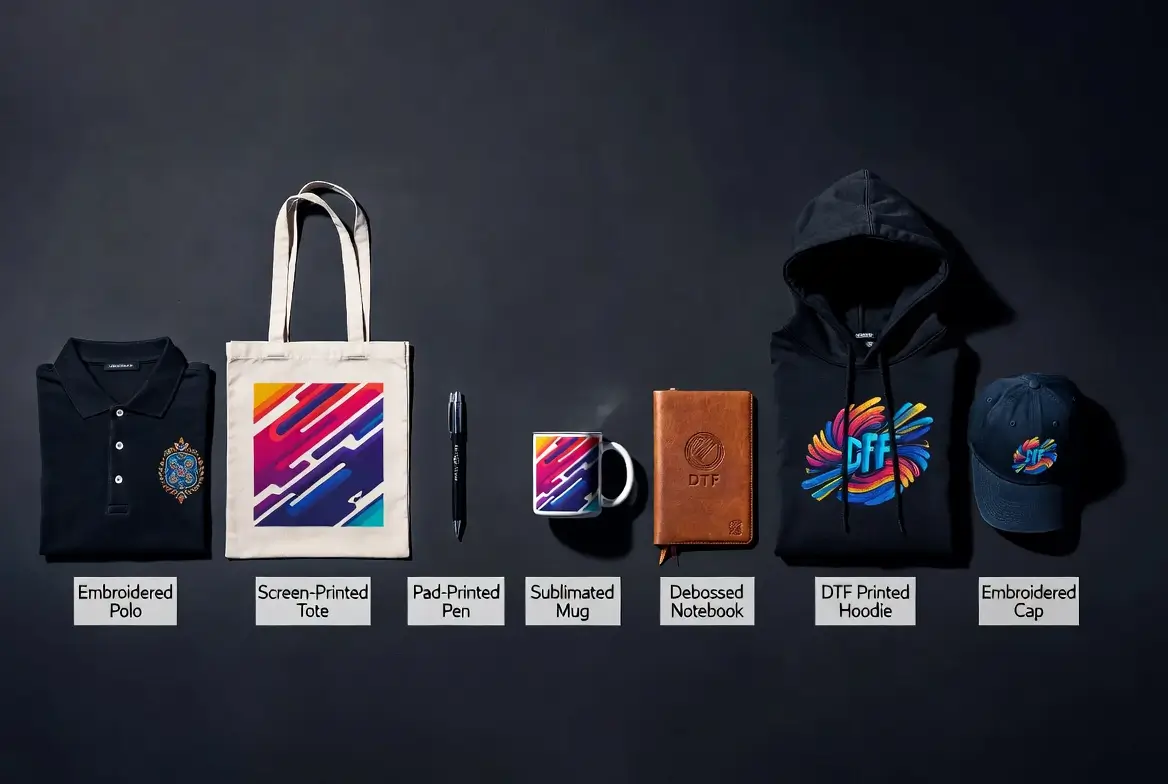
Best for: Polo shirts, caps, beanies, jackets, workwear, and anything that needs a premium, long-lasting finish with a professional look.
Pros: Highly durable, premium look and feel. Washable without fading.
Cons: Not ideal for very fine detail or photographic imagery. Works well with solid colour designs.
Cost note: Setup involves digitising your artwork, a one-off cost. Embroidery charges are based on number of garments and stitches in the design.
3D Embroidery
Similar to standard embroidery, but stitched over foam to create a raised, three-dimensional effect. Best for: Caps, hats, and premium headwear where you want your logo to really stand out.
Pros: Eye-catching, premium result.
Cons: Best suited to simple, bold logos rather than detailed.
Screen Printing
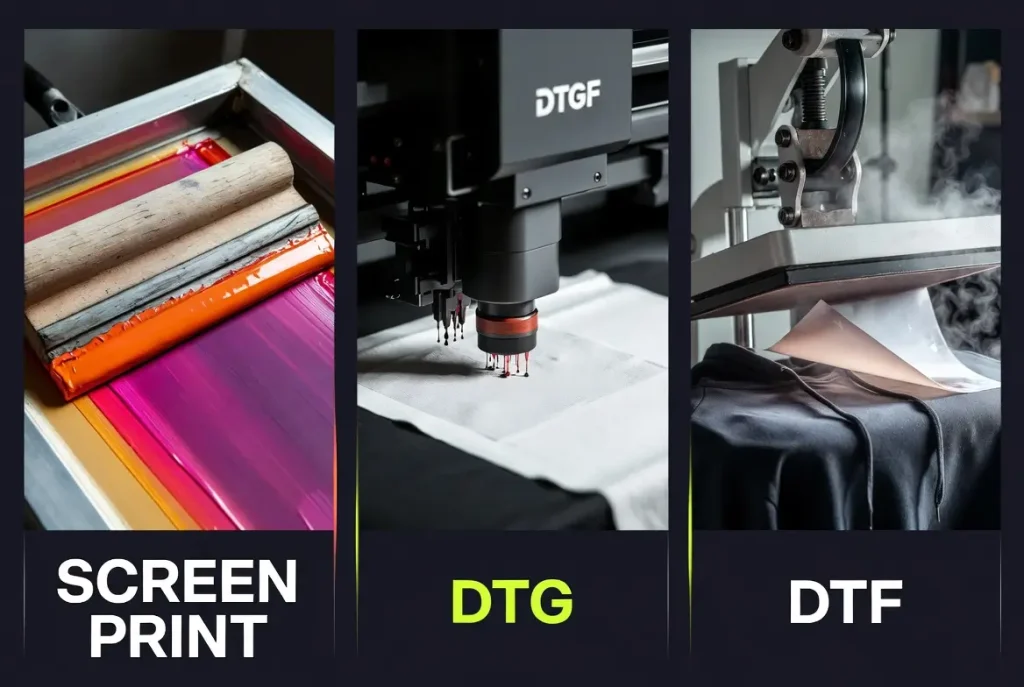
The process of pushing ink through a mesh screen (per colour / per size / per design) directly onto the product.
How it’s done: A screen is created for each colour in your design. Ink is applied through the screen in layers to create the finished product.
Best for: T-shirts, tote bags, calico bags, and flat fabric items in medium to large quantities. Pros: Vibrant, durable colours. Extremely cost-effective at volume.
Cons: Each colour requires a separate screen (setup per colour). Not used for gradients/graduated colour, photographic images, or very small runs.
DTF (Direct to Film) Transfer
Your design is printed onto a special film, which is then heat-pressed onto the garment.
Best for: T-shirts, hoodies, bags, and apparel where full-colour or complex artwork is needed — especially in smaller quantities.
Pros: Full colour, no minimum order per colour, suitable for complex designs including gradients and photographs. Good for small runs.
Cons: May not last as long as screen print on heavy-use workwear with frequent washing. Slight texture to the print.
DTG (Direct to Garment) Printing
A specialised inkjet printer prints directly onto the garment, like printing on paper.
Best for: Full-colour, photographic, or highly detailed designs on cotton garments in small quantities.
Pros: No setup costs per colour (with the right artwork). Full colour. Ideal for custom one-off designs or very small runs.
Cons: Works best on 100% cotton. Not as cost-effective at scale. Not suitable for performance fabrics.
Pad Printing
A silicone pad picks up ink from an etched plate and transfers it onto the product surface.
Best for: Pens, keyrings, USB drives, phone accessories, and other small promotional items with curved or irregular surfaces.
Pros: Works on almost any surface including curved, irregular, and recessed areas. Good for fine detail. Cons: Limited colour options per run (usually a limited number of colours). Not suitable for fabric.
Sublimation
The process where heat and pressure convert special dye into a gas that permanently bonds with synthetic fibres or specially coated surfaces.
Best for: Polyester apparel (sports uniforms / teamwear, performance wear), mugs, phone cases, and coated hard goods.
Pros: Permanent, full-colour, edge-to-edge design. Extremely vibrant. Won’t crack or peel. Allows for multiple logos and infinite designs.
Cons: Not suitable for cotton.
Rotary Digital Printing
A continuous roll-to-roll printing process used for all-over designs. Best for: Drink bottles. Custom-shaped items with print all over.
Pros: Allows full-coverage, all-over prints.
Cons: Specialised process — suitable for specific product types.
Debossing & Embossing
A metal die presses into material to create a recessed (debossed) or raised (embossed) impression. Best for: Leather goods, compendiums, PU notebooks, keyrings and other corporate gifts.
Pros: Premium, tactile finish — no ink, just the impression of your logo. Long-lasting. Cons: Works best with simple logos and solid forms.
Digital Transfer / SupaColour
A photographic-quality full-colour transfer printed digitally and commercially heat-pressed to the garment. Best for: Full-colour designs on garments, bags, and accessories. Good for small-to-medium runs.
Pros: Very high colour accuracy, suitable for complex artwork.
Cons: Texture is slightly more noticeable than screen print. May require higher attention for care instructions.
Not Sure Which Method Is Right for You?
That’s exactly why we’re here. At PromoLink, we’ll look at your artwork, your product, your quantities, and your budget. We’ll work together to recommend the best method to provide the strongest result for your investment. Get in touch and we’ll talk it through.