DECORATION METHODS
We Print, Stitch, Press and Brand.
Every Order.
Not sure which decoration method is right for your logo? We’ve been helping Australian businesses brand their products for over 25 years — from a single embroidered polo to 10,000 screen-printed tees.
Every order includes free artwork preparation and a digital proof before anything goes to production. So you’ll always know exactly what you’re getting before we start.
Australian-Owned
Digital Proofs before Production
Fast Delivery Nationwide
9+ Decoration Methods
Embroidery to sublimation
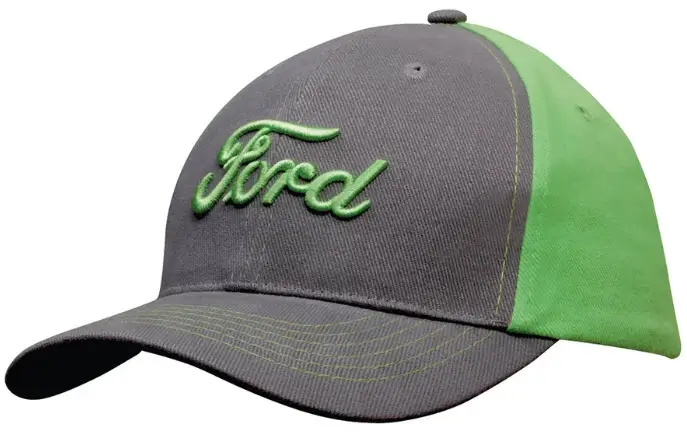
3D Embroidery
3D embroidery uses a foam base stitched over with thread to create a raised, dimensional design. It gives logos a bold, tactile look that stands out — especially on caps and structured headwear.
When is it used?
Best for caps, beanies, and structured hats where you want the logo to pop off the surface. Works well with simple, bold designs rather than fine detail.
Important to know:
The foam adds height to the design, so fine lines and small text don’t translate well. Stick to solid shapes and bold lettering for best results. Colour options are slightly more limited than flat embroidery.
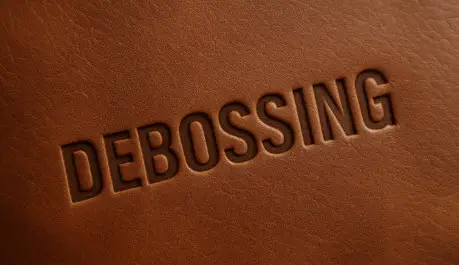
Debossing
Debossing uses a metal press to permanently impress your design into the surface of the product, creating a recessed indent.
When is it used?
Most commonly used on notebooks, compendiums, and leather or PU-style products. It gives a clean, premium finish without any colour — the design is visible through texture and shadow rather than ink or thread.
Important to know:
Debossing is a single-colour process by nature — the impression itself is the decoration. It’s the opposite of embossing. A good way to remember it: debossing goes down into the surface, embossing comes up.
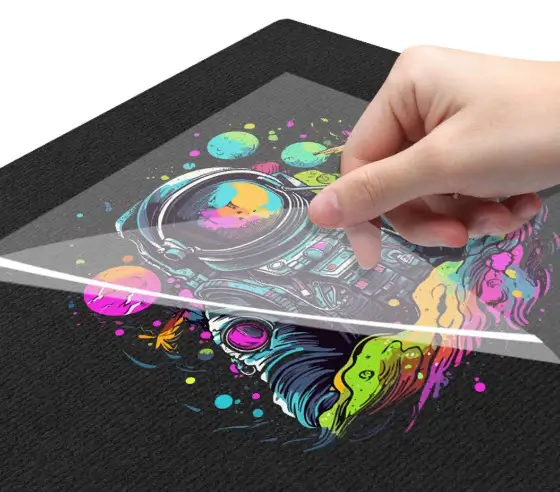
Digital Transfer / DTF
DTF (Direct to Film) printing uses a digital laser to print your design onto a special film, which is then heat-pressed onto the product. It’s ideal for highly detailed artwork, photographs, and designs with many colours or fine lines.
When is it used?
Popular on apparel items like hoodies, tees, and bags. It’s often a more affordable option than screen printing when multiple colours are involved, and it handles complex artwork with ease.
Important to know:
DTF can withstand regular machine washing, making it a durable choice for garments. It’s one of the most flexible decoration methods available — great for short runs with no colour limits.
Embossing
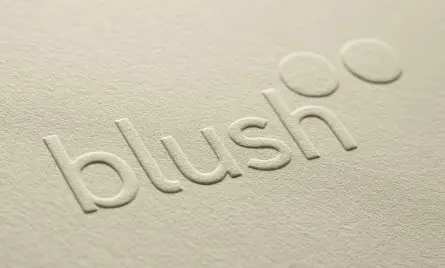
Embossing uses a metal press to create a raised design on the surface of the product, the opposite of debossing.
When is it used?
Used on notebooks, card stocks, compendiums, and apparel items like beanies and caps. The raised effect is applied 0.1cm underneath the surface of the product.
Important to know:
Like debossing, embossing is typically single-tone, the decoration is the raised shape itself rather than added colour. A good way to distinguish the two: embossing raises the design, debossing recesses it.
Embroidery
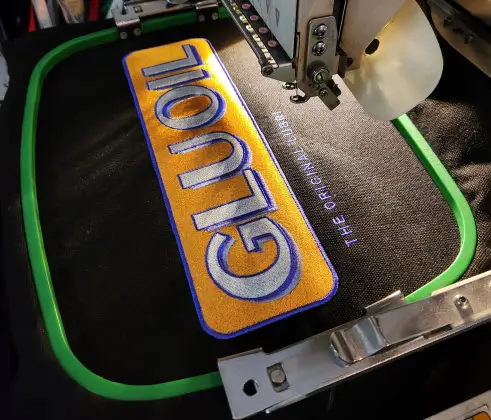
The most common choice for corporate apparel — polo shirts, jackets, vests, caps, beanies, and bags. If you want your logo to look sharp and last the life of the garment, embroidery is the go-to.
When is it used?
Used on notebooks, card stocks, compendiums, and apparel items like beanies and caps. The raised effect is applied 0.1cm underneath the surface of the product.
Important to know:
Embroidery works best with solid shapes and clear lettering. Very fine detail, thin lines, and small text can be difficult to reproduce accurately in thread. Your artwork will be converted into a stitch file before production — we’ll send you a digital proof to approve first. Embroidered items can be machine washed normally.
Pad Printing
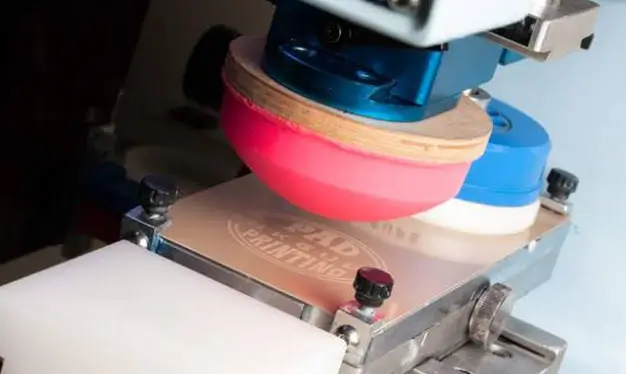
Pad printing transfers ink from an engraved plate onto the product via a silicone pad. It’s a precise method suited to printing on small, curved, or irregular surfaces.
When is it used?
The standard decoration method for pens, keyrings, bottles, small tools, and most hard promotional items. If you’ve ever seen a logo on a pen, it was almost certainly pad printed.
Important to know:
Pad printing is limited to 1–4 solid colours per run — it’s not suited to photographic images or colour gradients. It’s the most cost-effective method for printing on smaller items and works well on surfaces where other methods can’t reach.
Rotary Digital Printing
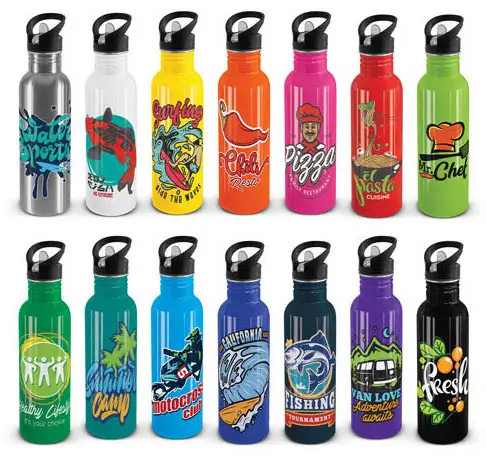
Rotary digital printing is a full-colour digital process that wraps your design around cylindrical products with edge-to-edge coverage. It produces the most vibrant and detailed full-colour results available for drinkware.
When is it used?
Used primarily on drink bottles, mugs, and other cylindrical products where you want a photographic-quality or gradient design covering the entire surface.
Important to know:
Rotary digital printing is recommended as hand-wash only — it’s not suited to dishwasher use. If the logo on your drinkware needs to include gradients, photographs, or complex artwork, this is the method to choose.
Screen Printing
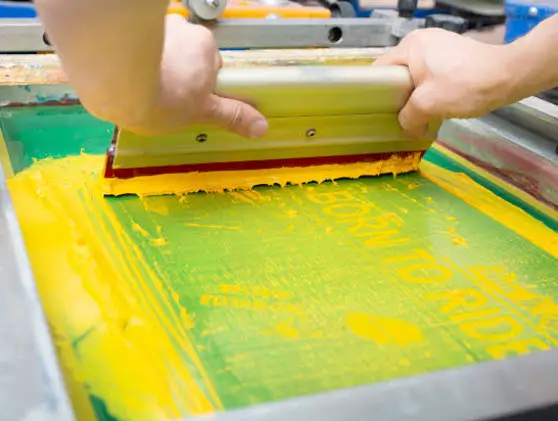
Screen printing pushes ink through a mesh screen onto the product surface using a squeegee. Each colour in your design requires a separate screen, making it a precision process for bold, consistent results.
When is it used?
Best suited to larger flat surfaces — tees, hoodies, tote bags, and banners. It’s the most cost-effective method for large quantity runs with a limited number of solid colours.
Important to know:
Screen printing cannot reproduce colour gradients or photographic images — it works with solid, spot colours only. If your design has 4 or more colours, DTF or digital printing may be a better option. The ink bonds directly to the fabric and holds up well to regular washing.
Sublimation
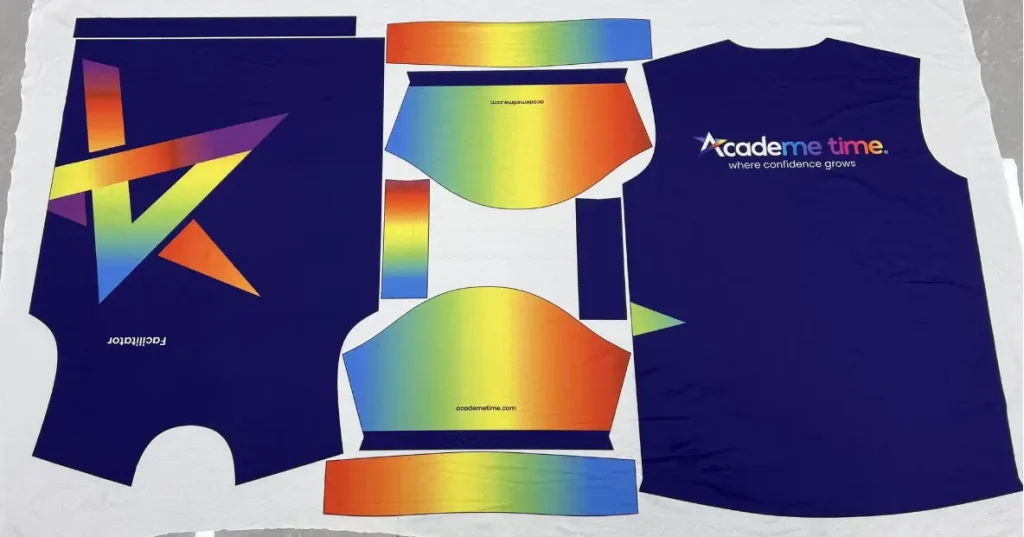
Sublimation is an edge-to-edge printing method that converts dye into gas under heat and pressure, bonding it permanently into the fabric or substrate. The result is a vibrant, full-colour print that won’t crack, fade, or peel.
When is it used?
Best suited to products with a white or light base — the sublimation dye is transparent, so it relies on the product’s base colour. Commonly used on apparel, caps, sports jerseys, drink coolers, stubby holders, and hard items like mugs, mouse mats, and ceramic products.
Important to know:
Sublimation only works on polyester fabrics or polyester-coated hard substrates. It won’t bond to cotton or dark-coloured products. The design goes all the way to the edges with no border — it becomes part of the product surface rather than sitting on top of it.
Ready to Brand Up in Canberra?
Whether you know exactly what you need or you’re starting from scratch, the PromoLink team is here to help. Get in touch for a free, no-obligation quote.
Call us: (03) 9855 1108